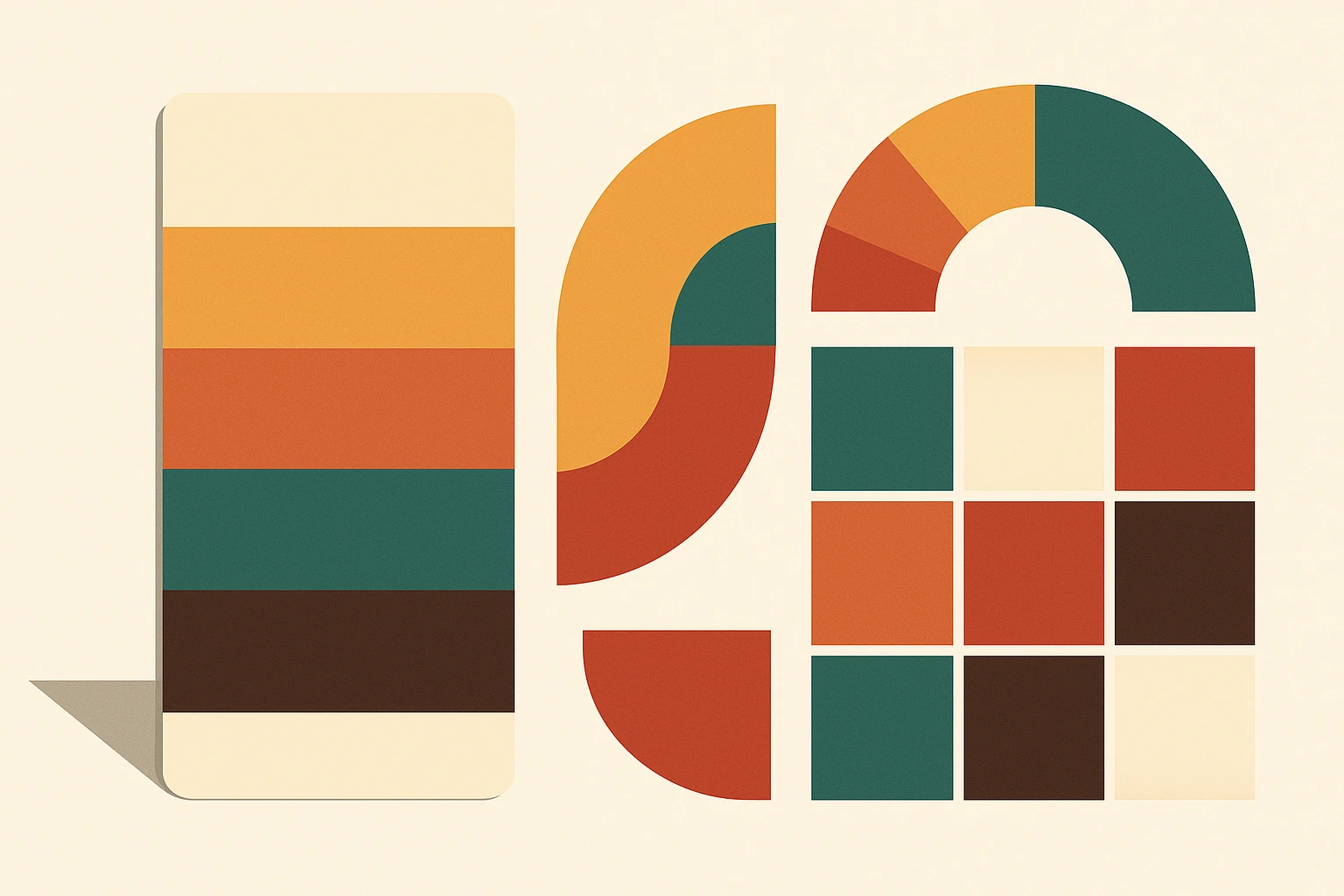
Exploring the World of Vintage Color Palettes: Retro Inspiration for Modern Design
by ColorSift Editorial Team
In today's design landscape, vintage aesthetics are making a stunning comeback, appealing to those who crave nostalgia with a modern flair. This blog post explores the allure of vintage color palettes, illustrating how they can inspire and enhance contemporary design projects. From mid-century modern to art deco, discover how to integrate these retro inspirations into your work for a unique, stylish twist.
Understanding Vintage Color Palettes
Let's talk about vintage color palettes, shall we? They're not just old-school vibes; these palettes are a blend of charm and history, bringing past trends back to life. When you think of vintage, imagine colors that represent different eras: the avocado greens of the '70s or the royal blues of the art deco period.
The colors from these times didn't just look good—they made people feel things. In the '50s, cheerful pastels brought post-war optimism. In the '20s, bold jewel tones evoked opulence.
Popular Vintage Color Palettes
What do you picture when "mid-century modern" pops into your mind? Mustard yellows and olive greens, right? They're classic!
Art deco was all about drama, capturing attention with rich jewel tones and metallics.
Jump to retro pastels, and it's soft pinks and blues that steal the show. Lastly, the earthy tones of the '60s and '70s offer comfort and nostalgia like burnt orange and avocado green.
Incorporating Vintage Palettes in Modern Design
So, how do you bring these colors into today's world? Combine vintage shades with contemporary styles. Imagine a sleek modern kitchen with a splash of retro yellow.
Designing spaces—be it homes or offices—with these palettes adds character. And when applied to brand identity, they offer memorable touches that can stand out in marketing materials.
Showcasing Color Schemes: Tools and Resources
Don't worry about picking the perfect palette by yourself. Tools like Coolors and Adobe Color let you experiment with endless combinations.
Platforms like Pinterest are gold mines for inspiration, and sites like Behance offer amazing examples from talented designers.
Practical Tips for Using Vintage Colors Effectively
Start with a dominant vintage color. Pair it with complementary hues. Balance is key—mix retro colors with modern elements to keep the design fresh.
Avoid overwhelming your space with too many vintage tones. A minimalist approach with selective color use can create impressive results.
Case Studies: Successful Use of Vintage Palettes in Design
Look at brands that nailed it. Some designers mix vintage palettes with modern aesthetics beautifully. Websites with a dash of retro color create engaging experiences.
Interiors, branding, web design—all areas where vintage palettes shine, offering lessons on balance and creativity.
Conclusion
Embracing vintage color palettes in modern design can lead to striking and memorable projects that resonate with audiences on multiple levels. Understanding their historical significance and blending them with contemporary aesthetics allows you to capture the charm of bygone eras. With the vibrant diversity of these palettes, you're ready to infuse retro brilliance into your next project.