Understanding Color Theory: The Foundations Every Designer Needs
by ColorSift Editorial Team
Color theory is the cornerstone of effective design. By understanding how colors interact, complement, and contrast, designers make compositions that are both visually appealing and emotionally resonant. Let me guide you through the essential components of color theory, including the color wheel, primary and secondary colors, and the subtle nuances of hues. We'll dive into some practical applications that every designer should know.
The Color Wheel Explained
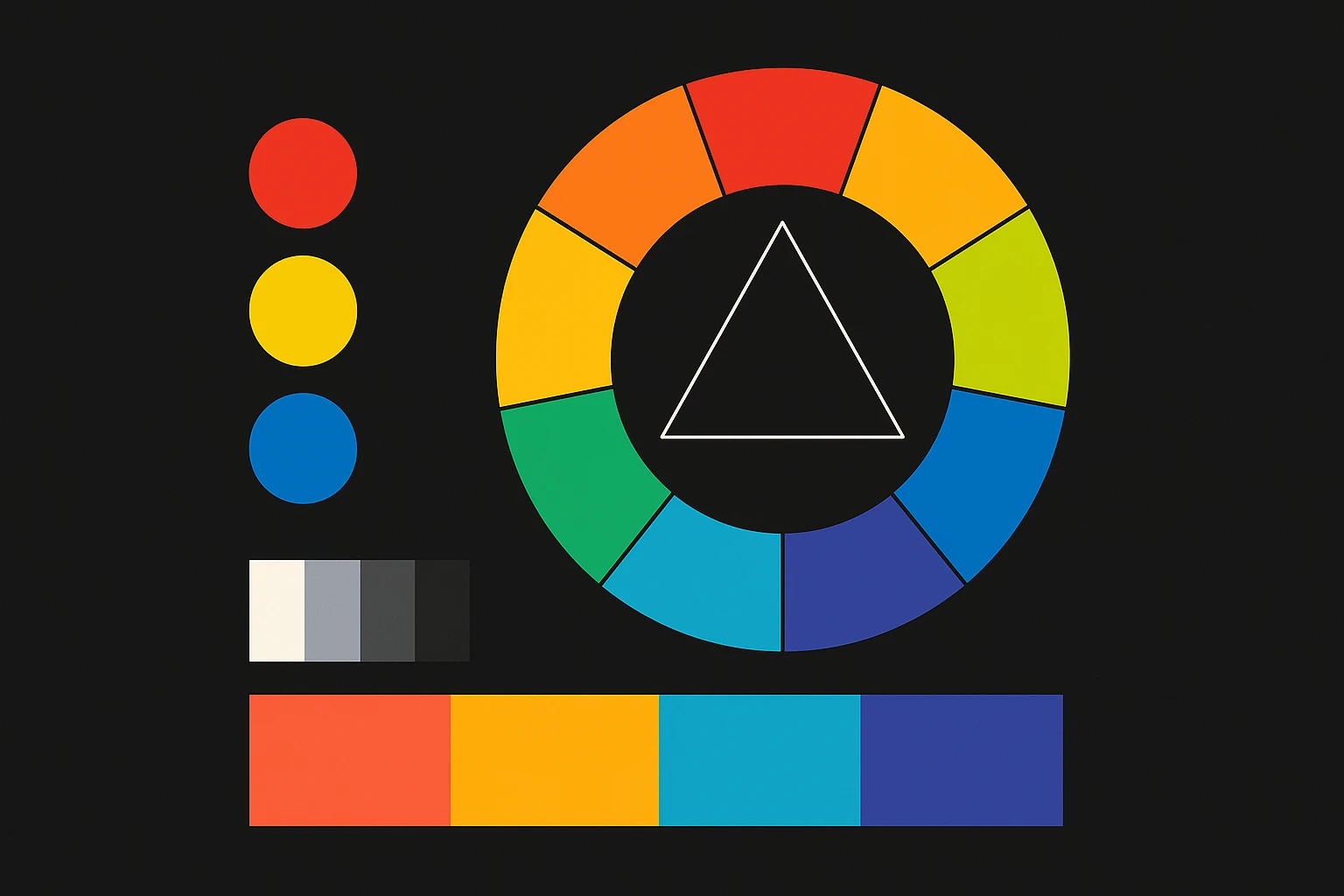
The color wheel is a designer’s trusty map. It’s not just a circle of colors, but a functional tool to understand how colors relate. Picture it as the Rosetta Stone of color.
We have three main categories:
- Primary colors: Red, blue, and yellow. Think of these as the fundamental building blocks of color.
- Secondary colors: These are created by mixing primary colors. Mixing blue and yellow gives green, for example.
- Tertiary colors: A blend of primary and secondary colors, providing more variety.
Designers use the color wheel to mix or create new colors, much like a chef spices up a classic dish. It’s all about balance and harmony.
Understanding Primary and Secondary Colors
What’s the big deal with primary colors? Well, without them, the color spectrum would collapse. In the world of color creation, they’re the stars of the show. Now, secondary colors step up by pairing these stars in exciting combinations.
Check out this simple principle:
- Red + Blue = Purple
- Blue + Yellow = Green
- Yellow + Red = Orange
These combinations generate vibrant schemes.
The Role of Hues in Design
Hues, saturation, and brightness might sound like abstract art terms, but they’re key to successful design. A hue refers to a color in its purest form—like red or blue. Changing the saturation or brightness alters the mood completely.
Think of two shades of blue:
- A bright, saturated blue might feel energetic
- A muted, darker blue often feels calm or somber
These differences can drastically change the emotion conveyed in a design.
Complementary and Analogous Color Schemes
Complementary colors—opposites on the color wheel—bring drama and energy:
- Red and green
- Blue and orange
Analogous colors, on the other hand, are next-door neighbors on the wheel and are wonderful for creating harmony and unity:
- Think of a sunset with rich reds, oranges, and yellows blending seamlessly.
Here’s a tip: Use a complementary highlight to catch the eye or choose analogous colors for a more cohesive look.
Color Psychology: The Emotional Impact of Colors
You know how certain colors just make you feel a certain way? That’s color psychology at work. It’s like magic for designers:
- Red: Often evokes passion or urgency
- Blue: Trust and calmness
- Yellow: Cheerful and inviting
Famous brands like Coca-Cola use red to elicit excitement, while tech companies often use blue to appear reliable and sophisticated.
Practical Application of Color Theory in Design Projects
How do you bring this knowledge into your work? Start with a step-by-step approach to create a harmonious color palette:
- Pick a base color to express the primary mood.
- Choose one or two complementary or analogous colors.
- Consider neutrals to balance the design.
Use these guidelines in both print and digital media, ensuring consistency across all platforms.
Successful designs reflect a keen understanding of color harmony. Look at Apple's sleek use of grayscale with pops of color.
Conclusion
Mastering color theory is an essential skill that opens up endless avenues for creativity and communication. Understanding how colors interact lets designers craft impactful visuals that resonate deeply.
Have questions or need a guiding hand with your projects? Reach out! Let’s transform your ideas into vivid realities.