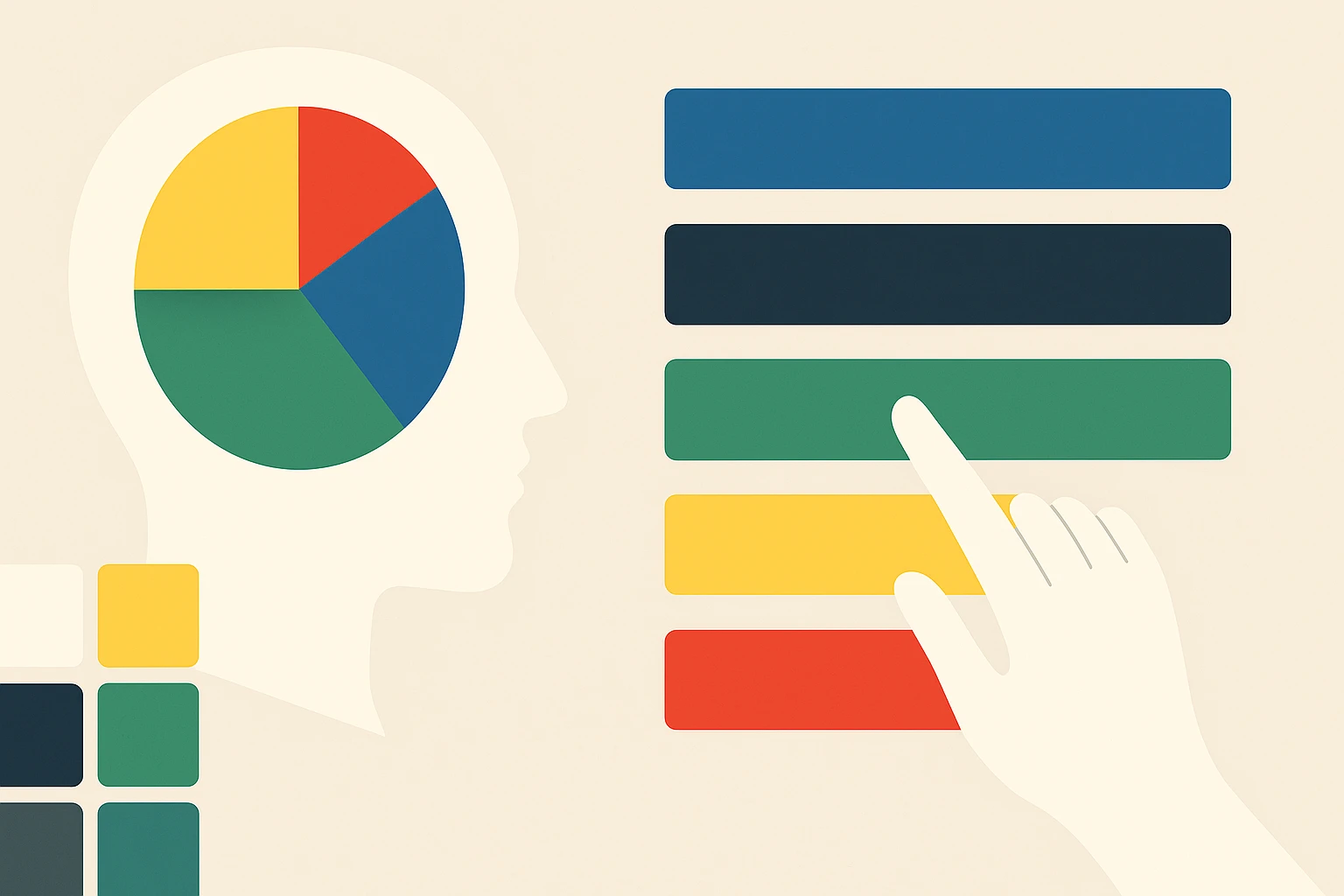
The Psychology of Color: How Different Shades Influence User Experience
by ColorSift Editorial Team
Understanding the Basics of Color Psychology
Color psychology might sound like something out of a sci-fi film, but it's as real as the screen in front of you. Researchers study how colors affect our emotions and behaviors, and designers take these insights to create memorable experiences.
Historically, colors have carried meanings across cultures—from ancient Egyptian rituals to royal European iconographies. Designers today borrow these historical cues, blending tradition with modern innovation, creating a vibrant tapestry of meaning.
Emotional Responses to Colors
Ever wonder why you feel energized in one room and calm in another? Colors can play tricks on your mind more than you know.
- Red: Think of it as the exclamation mark of colors—demanding attention and urging urgency. Ideal for a "Buy Now" button.
- Blue: The trusty handshake color. Associated with calm and reliability, it's the logo choice for many tech companies.
- Yellow: Packs a punch of optimism and joy. Great for grabbing attention in a cheerful way.
- Green: Nature’s middle ground, symbolizing growth and balance. Often used by brands that promote eco-friendliness.
- Purple: A dash of mystery and a hint of creativity—perfect for a brand that’s all about innovation.
- Black: Classic and elegant, it whispers sophistication. Think high-end fashion brands.
- White: The canvas of simplicity. Represents purity and is often used to invoke a sense of minimalism.
Color Preferences Across Cultures
Colors don't speak the same language everywhere. In India, red might symbolize joy, while in South Africa, it can signal mourning.
Consider Japan’s love for cherry blossom pink or the Middle East’s association of green with prosperity. Recognizing these variations is key to expanding your brand globally.
Designing with Color: What's the Game Plan?
Here's the thing—choosing the right colors is as much about science as it is about style.
- Know Your Audience: Tailor palettes to fit the demographic. Different ages and genders may lean towards specific hues.
- Contrast for Clarity: Ensure readability with contrasting colors. Your text should pop against the background.
- Test, Test, Test: Use A/B testing to see which color schemes perform best with your audience.
- Accessibility: Keep in mind color-blind users. Tools like color contrast analyzers help ensure every user can engage with your design.
Case Studies: Brands That Hit the Color Jackpot
Spotify and Its Vibrant Greens
Spotify uses a lively green to evoke youthful energy and creativity. This choice aligns with its brand image of making music a vivid, shared experience.
Facebook’s Trusted Blue
Facebook's choice of blue fosters trust and approachability, aligning perfectly with its goal of connecting people worldwide.
Starbucks' Green Crescendo
Starbucks taps into green to promote a sense of renewal and nature, inviting users to sip and relax.
Tools and Resources for Color Selection
Want to whip up your own stunning palette?
- Palette Generators: Tools like Adobe Color and Coolors offer endless inspiration.
- Online Resources: Websites like Colour Lovers offer community-generated color ideas.
- Get Feedback: User feedback is invaluable. Sometimes what looks good to you might not resonate with your audience.
Understanding color psychology goes far beyond picking a favorite hue. It's about crafting experiences that resonate with the audience you’re designing for. By aligning the psychology of color with your design strategy, you're not just painting pretty pictures—you’re enhancing user experience and breaking through the noise. Now, grab your paintbrush (or mouse), and start creating!