Mastering Color Harmony: Your Essential Guide to Complementary Palettes
by ColorSift Editorial Team
Introduction
In the world of design, color choice can make or break a project. Complementary color schemes are among the most potent tools for designers, providing striking visual contrasts that engage and captivate audiences. This guide explores what complementary colors are, how to use them effectively, and showcases vibrant palettes that emphasize their power. Whether you're designing a website or a marketing piece, mastering color harmony will elevate your projects significantly.
Understanding Complementary Colors
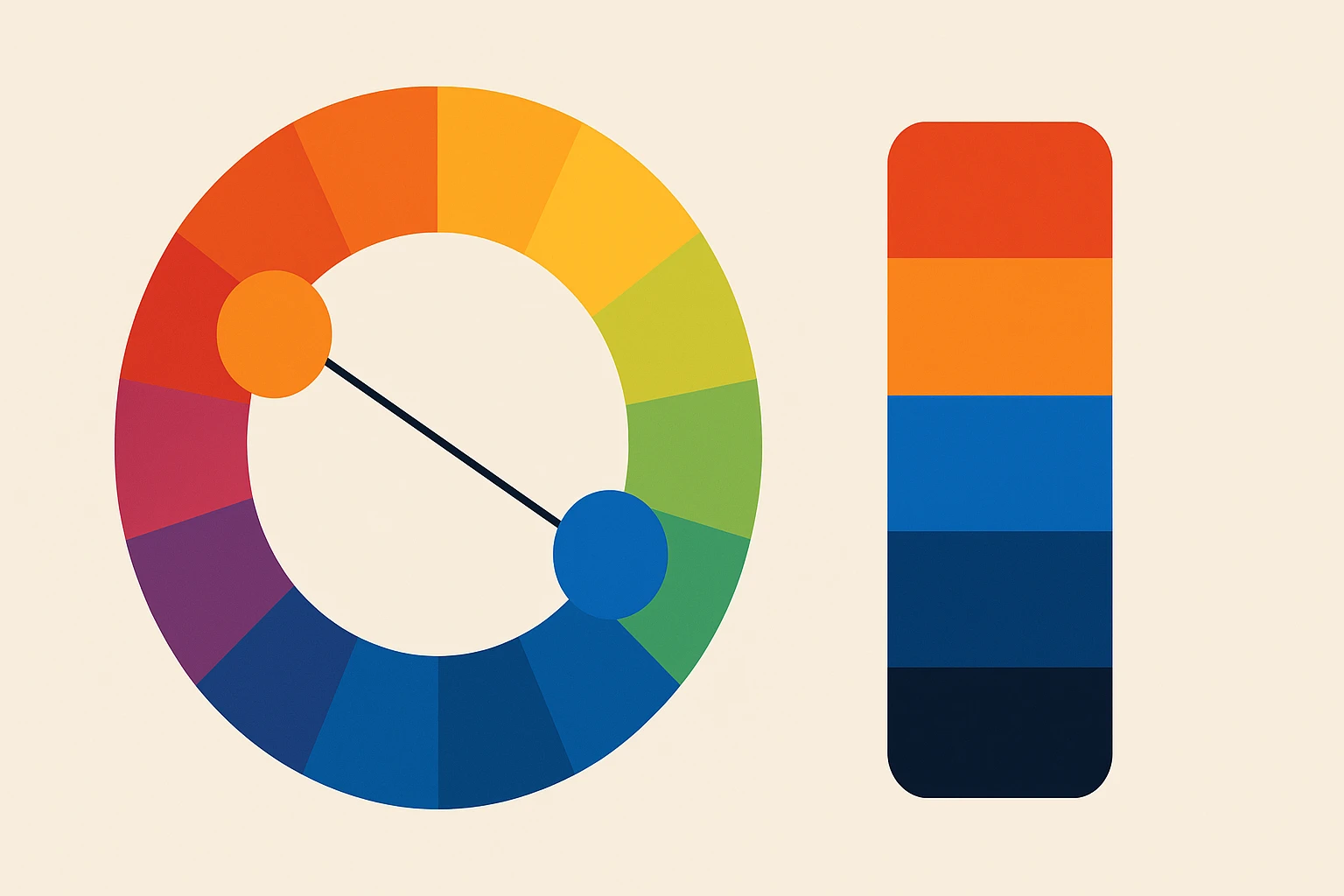
Complementary colors are pairs of colors that, when combined, cancel each other out. This means they produce a grayscale color like white or black when mixed. But don't worry—when placed side by side, they make each other appear brighter. These colors are located opposite one another on the color wheel, creating vibrant contrasts. For example, red and green or blue and orange.
Here's a quick activity: look at a color wheel and pick any color. Now trace your finger straight across the wheel. The color you land on is its complement. Marvelous, isn't it?
The Psychology of Color: Impact and Emotion
Colors do more than please the eye—they affect how we feel and perceive things. Ever noticed why fast-food chains often use red and yellow? These colors can stimulate appetite and create a sense of urgency. With complementary colors, the effect is amplified. Pairing blue and orange could evoke calmness alongside enthusiasm.
Think about your project. Are you trying to communicate energy or tranquility? The colors you choose aren't just about aesthetics—they're about crafting a mood.
Best Practices for Pairing Complementary Colors
Using complementary colors can be tricky. It’s about balancing vibrancy and subtlety without straining the eyes. Here are some handy tips:
- Accent Use: Employ stronger colors as highlights to add pop.
- Balance: Mix bold with muted tones to avoid visual overload.
- Gradient Play: Incorporate tints and shades for smoother transitions.
Remember, it's about making elements stand out, not shouting for attention.
Showcasing Stunning Complementary Color Palettes
Let’s dive into some stunning examples, including hex codes to help you recreate these looks. These palettes can be applied to various real-world design cases like website themes, branding efforts, or personal projects.
Feel free to use online tools like Adobe Color for creating your own combinations.
Common Mistakes to Avoid with Complementary Colors
Using complementary colors requires a little finesse. Watch out for:
- Overusing Intensity: Too much saturation can overwhelm.
- Ignoring Context: What works in one setting might not fit another.
- Neglecting Accessibility: Color contrast should be clear for everyone, including those with visual impairments.
Case Studies: Successful Use of Complementary Color Schemes
Branding Example
One successful brand that uses complementary colors is FedEx. Their purple and orange logo is instantly recognizable and communicates reliability and urgency.
Product Design
Coca-Cola has often paired reds with cool blues in promotional materials, balancing warmth with thirst-quenching imagery.
Web Design
Look at Spotify—green and dark gray offer a calming yet engaging interface that keeps users scrolling.
Wrapping Up
Complementary color palettes aren’t just about beauty—they enrich user experience. By understanding the theory behind color harmony, you can create designs that are not only striking but convey the right message and emotions. Balance and intention are key. Happy designing!