Color Theory 101: The Basics Every Designer Must Know
by ColorSift Editorial Team
Introduction
Color theory is like a secret weapon for designers. It's that magical blend of science and art that turns good designs into great ones. You'll take the mystique out of color by understanding the fundamentals like the color wheel, harmonious combinations, and the psychology behind those choices. Ready to elevate your design skills? Let's jump in!
Understanding the Color Wheel
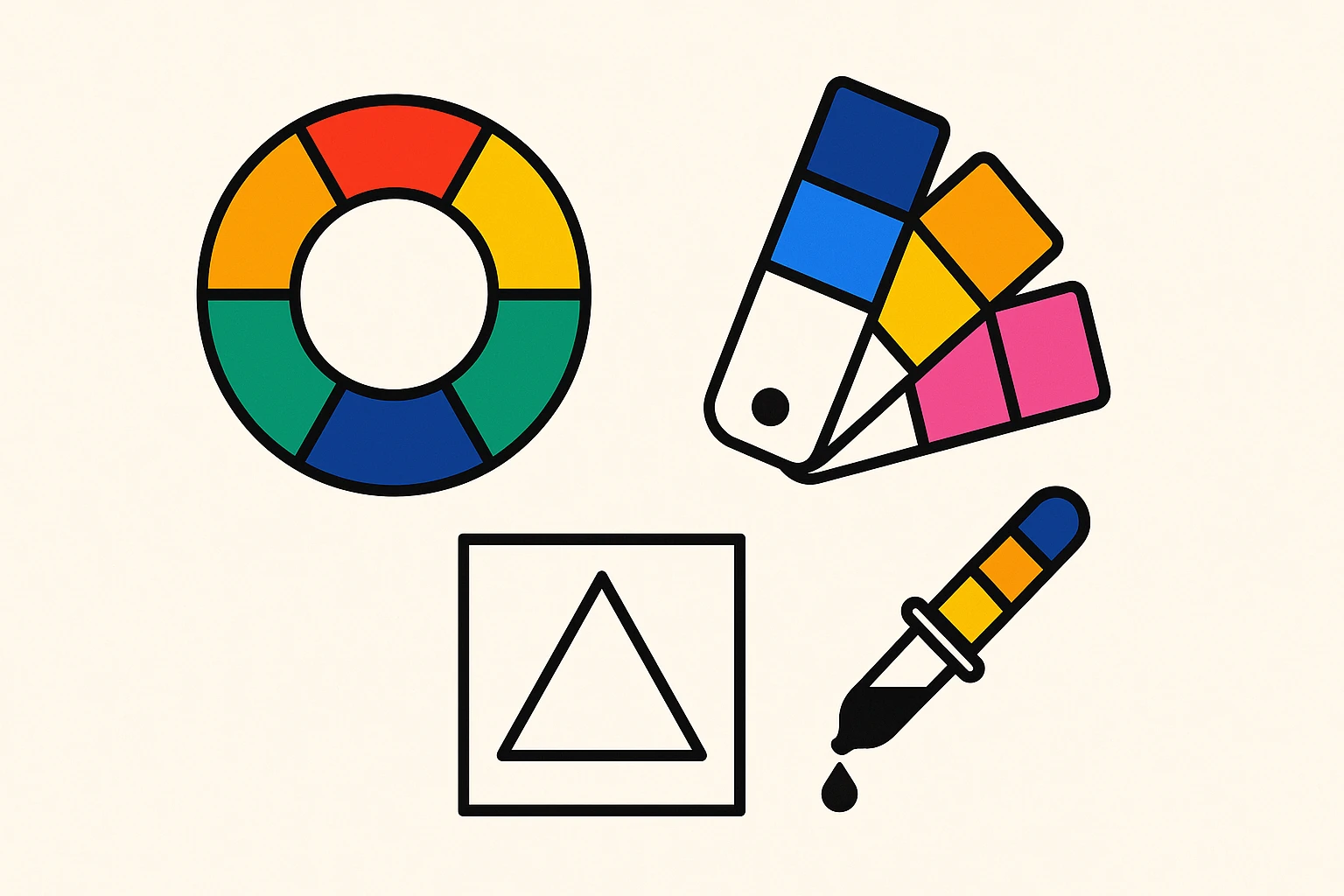
Picture a painter's palette spinning with possibilities. That's your color wheel—a tool that organizes colors visually and helps you understand their relationships. The wheel divides into three categories: primary, secondary, and tertiary colors. Primary colors (red, blue, yellow) form the base. Mix them up, and you get secondary colors (green, orange, purple). Push it further, and tertiary colors emerge!
But there’s more. Hues represent the pure colors; saturation adds intensity, like turning the volume up or down; brightness lightens or darkens these hues, affecting mood and readability. Think of them as the ingredients that make your visual recipe sing.
Primary, Secondary, and Tertiary Colors
Primary colors, your trusty triad—red, blue, yellow—stand alone. They can't be created by mixing. But swirl these together, and you unlock secondary colors like green, orange, and purple.
Tertiary colors? Imagine a midpoint—a harmonious dance between a primary and a secondary color. They bring nuance to your designs. Think red-orange or blue-green. Use them to add layers of sophistication to your palette.
The trick with color combinations is balance. A harmonious palette draws the eye without overwhelming it. Check out these combinations:
- Analogous: Colors lying next to each other on the wheel. They create serene designs.
- Complementary: Direct opposites. Think bold contrast, dynamic tension.
Color Schemes: Creating Harmony in Design
Harmony is more than a pretty picture; it's visual music. Analogous, complementary, and triadic schemes guide your choices. Used wisely, they provide stability or energy to your projects.
Look at famous brands. Their cohesive palettes aren't random. They're strategic choices that communicate identity and emotion.
Tips for picking the perfect palette:
- Purpose: Understand the message you want to convey.
- Testing: Don’t just look at colors in isolation. Assess in context.
The Psychology of Color in Design
Colors speak to us on a primal level, stirring emotions and perceptions. Red excites; blue calms. Brands know this and deploy it wisely. Your favorite soda or tech company logo didn't end up like that by accident.
Choosing colors that resonate with your target audience requires knowing what stirs them. Who are they? What's their vibe? Match colors to audience, and you match mood to message.
Tools for Finding Color Inspiration
Stuck? Need a spark? Welcome to the digital age where Adobe Color and Coolors are your pals. Tools that generate palettes and remove guesswork.
Mood boards too! Assemble textures, images, and colors to see how they'd play together in real life.
Peek at successful designs; their choices can guide yours.
Common Mistakes to Avoid in Color Usage
Design grads, take note! Overusing color is like oversalting. It detracts, distracts, and confuses. Keep clarity.
Neglecting contrast makes content unreadable. Ever squinted at poorly colored text? Accessibility matters.
Feedback isn’t optional. It's critical. Get opinions, tweak, and improve.
Practical Applications: Color Theory in Action
Theories without practice are like guitars without strings. Look at case studies—real projects that harness color theory effectively.
Before and after snapshots reveal how smart color use transforms designs. Implement these strategies in your work, and watch your designs engage, delight, and communicate.
Conclusion
Master color theory, and you're not just picking shades—you're crafting experiences. Your journey into hues isn't just about seeing color; it's about feeling and understanding it. With the right tools and a splash of creativity, you'll design pieces that captivate and connect.